+1 646 759 2860






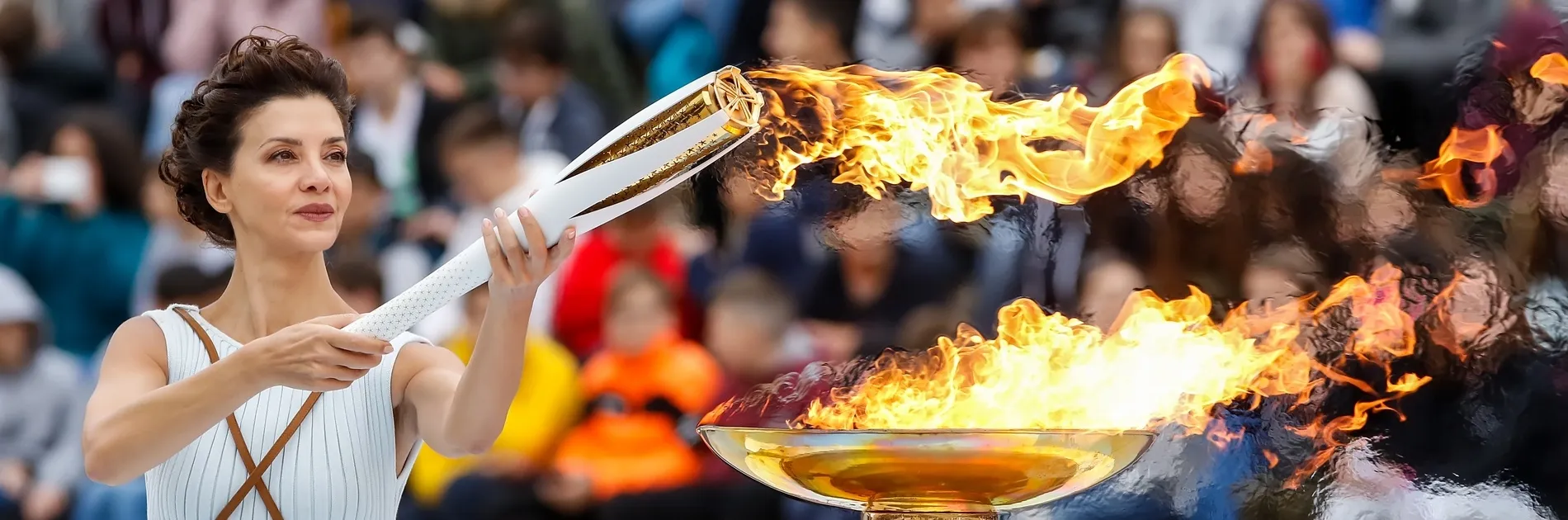
Before a single race is run or a single medal awarded, the opening ceremony has already told you everything you need to know about the Games that follow. It is the largest coordinated artistic event on the planet, watched by billions, and it has been reinvented from scratch every four years for over a century. Here is how it got there.
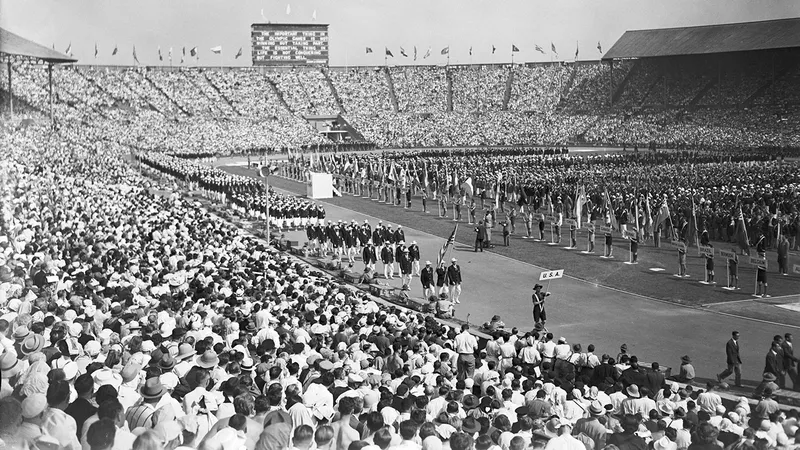
The Opening Ceremony in the Early Games: Form Without Spectacle
The first modern Games took place in Athens in 1896, and the opening ceremony was — by any contemporary standard — almost perfunctory. King George I declared them open in a speech, a crowd gathered in the Panathenaic Stadium, and the athletes appeared. There were no theatrical productions, no elaborate lighting rigs, no choreographed sequences involving thousands of performers. The formality of the occasion was its entire point.
This template held for decades. The 1908 London Games introduced the parade of nations — athletes marching behind their country's flag — and this single addition changed the character of the event permanently. Suddenly the ceremony was not just about declaring competition open; it was about the symbolic gathering of the world in one place. The parade remains the structural spine of every opening ceremony to this day.
By the 1920s, the three ritual elements that still define the opening ceremony had been established: the athletes' parade, the lighting of the flame, and the taking of the oath. Pierre de Coubertin, the French educator who had revived the Games, was insistent that these rituals carry weight. He understood — correctly — that a global sporting competition needed its own mythology.
The Opening Ceremony as National Statement: Berlin 1936 to Melbourne 1956
The 1936 Berlin Games marked the first time a host nation used the opening ceremony as a deliberate instrument of national projection at scale. The organization was meticulous, the production values unprecedented, and the symbolism — from the torchbearer's final run to the stadium — was designed to be photographed and filmed. Leni Riefenstahl's documentary record of those Games influenced sports broadcast aesthetics for a generation.
Whatever its political context, Berlin established a precedent: the opening ceremony was now a statement about the host country, not just a sporting preamble. Every host since has had to reckon with that precedent, either embracing it or deliberately subverting it.
The opening ceremony is not the prelude to the Games. For most of the world watching, it is the Games — the one moment they will remember long after the results have faded.
The 1948 London Games, held in a country still rationing food three years after the war, were austere by necessity — a stripped-back ceremony that nonetheless carried considerable emotional weight. Melbourne 1956 broke with protocol when Australian runner Ron Clarke lit the cauldron and nearly set himself on fire in the process. The flame, and its potential for drama, was firmly established as the ceremony's emotional climax.
The Opening Ceremony Goes Global: Television and the Age of Spectacle
The 1964 Tokyo Games were the first to be broadcast live internationally via satellite, and they changed everything. A ceremony that had previously been witnessed by a stadium crowd of tens of thousands was now being watched by hundreds of millions. The audience had changed, and the form had to follow.
Mexico City 1968 introduced the doves of peace as a recurring motif. Munich 1972 was designed to project a new, open Germany and did so with a lightness that contrasted sharply with the darkness that would follow later in those Games. Montreal 1976 spent more than any host had spent before and nearly bankrupted the city in the process — a cautionary tale about the relationship between ceremony ambition and financial reality that subsequent hosts have periodically ignored.
Moscow 1980 and Los Angeles 1984 were shaped by Cold War boycotts and staged their ceremonies accordingly — each a display of national confidence in the face of absent rivals. But it was Los Angeles that first properly understood the entertainment logic of the ceremony as television event. The 1984 opening featured a jetpack man flying into the stadium. The Games were back in the country that invented Hollywood, and it showed.
Opening Ceremony — Key Milestones
- 1908 London — Parade of nations introduced for the first time
- 1928 Amsterdam — The cauldron flame lit at a Games for the first time
- 1936 Berlin — First torch relay from Olympia; first large-scale broadcast
- 1964 Tokyo — First live international satellite transmission
- 1992 Barcelona — Archer lights the cauldron by flaming arrow; global audience of 3.5 billion
- 2008 Beijing — 15,000 performers; estimated global TV audience of 4 billion
- 2024 Paris — First ceremony held outside a stadium, along the Seine
The Opening Ceremony as Art Direction: Barcelona to Beijing
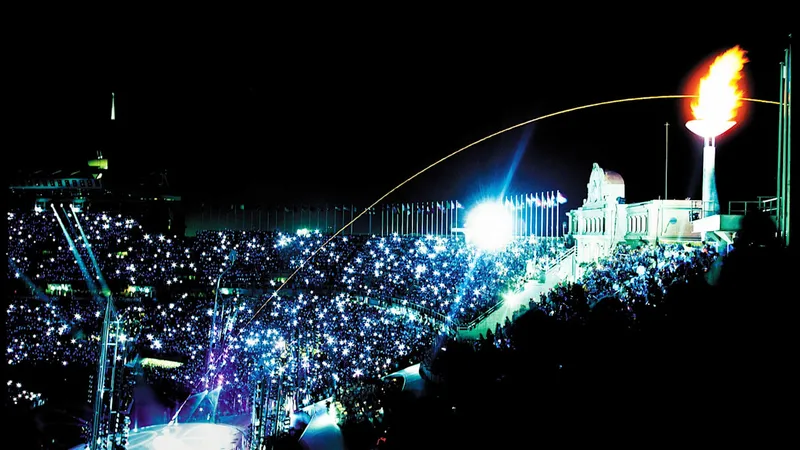
Barcelona 1992 is the ceremony most often cited as the moment the form reached artistic maturity. The archer Antonio Rebollo drew his flaming arrow and sent it in a high arc over the stadium — missing the cauldron, as it later emerged, but looking perfect on television. The global audience for that ceremony was estimated at 3.5 billion people. The opening ceremony had become, by any measure, the single most watched event in human cultural history, repeated every four years.
Sydney 2000 leaned into the country's indigenous heritage in a way that felt genuinely new, Cathy Freeman running the final leg of the torch relay and lighting a cauldron that rose through water. Athens 2004 staged a ceremony that told the story of Greek civilisation across four millennia in under four hours. Beijing 2008 deployed 15,000 performers and a budget that remains unmatched — a demonstration of logistical and artistic capacity that was also, unmistakably, a geopolitical message.
London 2012 did the opposite: Danny Boyle's opening ceremony was eccentric, self-deprecating, and deeply specific to British culture — from the industrial revolution sequence to the NHS tribute to Mr Bean playing keyboard in the Chariots of Fire parody. It was watched by 900 million people and reviewed like a film.
Paris 2024: The Ceremony Leaves the Stadium
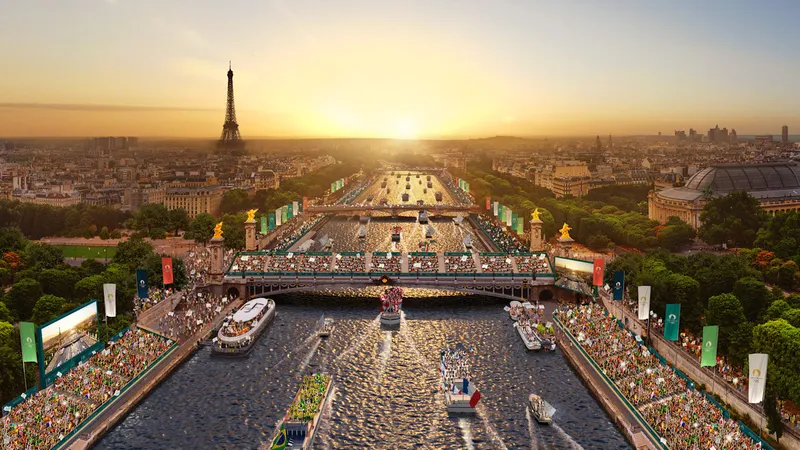
Paris 2024 broke the most fundamental convention of all: it moved the ceremony out of the stadium entirely, staging it along the Seine with the athletes on boats. Three hundred thousand spectators lined the riverbanks. It was a reminder that the format has no fixed rules — only the flame, the oath, and the athletes are truly non-negotiable. Everything else is up for reinvention.
Which brings us to Los Angeles in 2028. LA has hosted before — in 1932 and 1984 — and both ceremonies were shaped by the particular confidence of a city that makes entertainment for a living. The 2028 edition will take place in a city with more production infrastructure, creative talent, and broadcast experience than any other on earth. What it does with the opening ceremony will be watched, as always, by most of the world.
Opening Ceremony Packages for 2028 LA
We are already planning for Los Angeles. The 2028 opening ceremony will take place on 14 July 2028 at the SoFi Stadium — the same venue we scouted last year — and we have been building our 2028 LA opening ceremony packages around it. For those who want more time in the city, there is a 5-day package built around the ceremony and the opening days of competition, and an 8-day version that extends into the first week of events across the city.
The opening ceremony remains — after more than a century of reinvention — the single moment that no highlights package can replicate. The only way to experience it is to be there.